



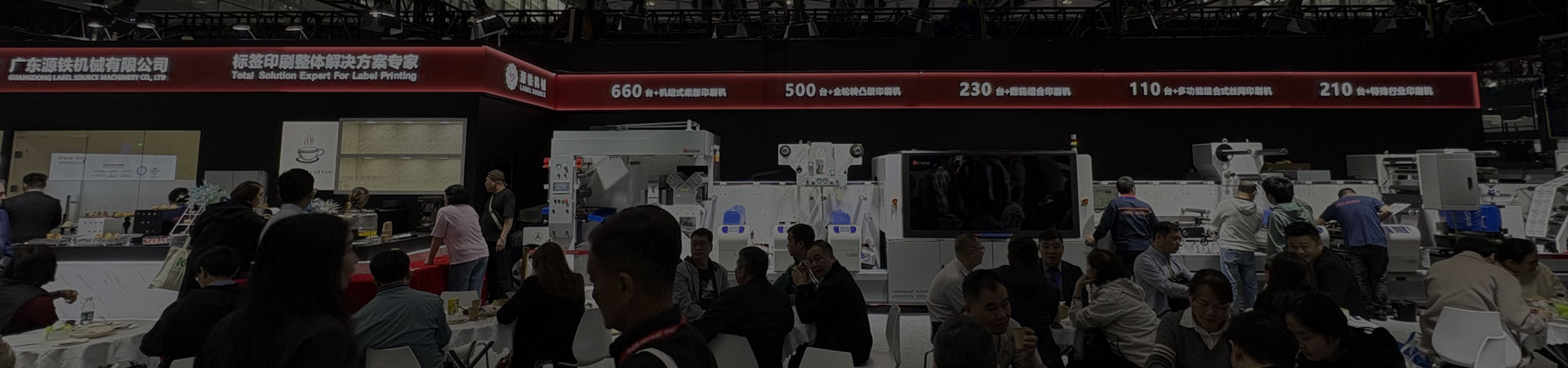

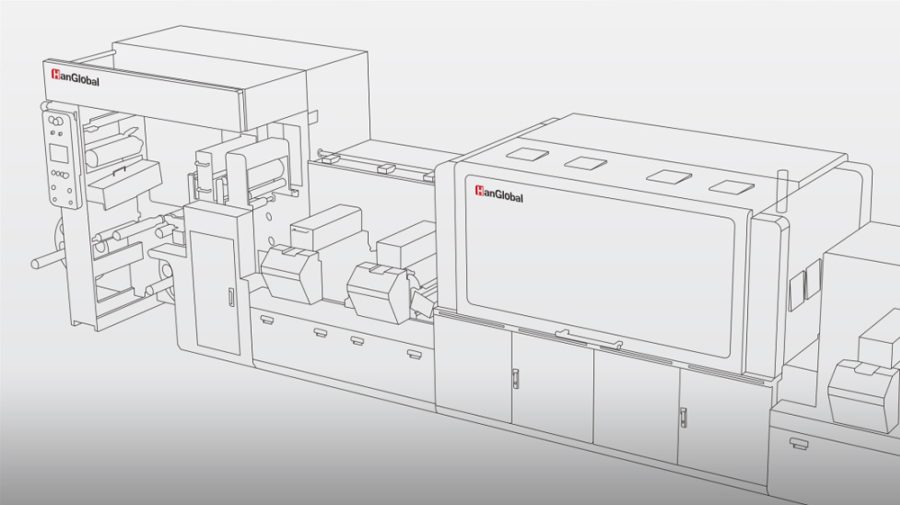
The secret to accurate and stable printing! A complete analysis of the core auxiliary modules of a 1200DPI Hybrid Digital Printer.
From substrate treatment to stable delivery, attention to detail lays a solid foundation for printing quality.
In our previous post, we detailed the six core advantages of the 1200DPI hybrid digital printer, showcasing the machine’s comprehensive capabilities. However, stable output from a machine relies not only on the core printing unit but also on the support of detailed auxiliary components. Today, we’ll focus on the machine’s core auxiliary modules to see how they ensure printing accuracy and stability from the very beginning.
In label printing production, the quality of substrate treatment and the stability of the feeding process directly determine subsequent printing accuracy, ink adhesion and yield. Even slight substrate deviations and surface dust may cause printing defects and affect production efficiency and product quality.
Speaking of this, you may be thinking: non-stop rewinding/unwinding, corona, dust removal, web guiding – these auxiliary modules are almost all equipped with mid-to-high-end equipment on the market.
Yes, these are indeed industry standards. However, the same modules, but different design standards, matching accuracy, and collaboration capabilities, bring about huge differences in production stability and yield.
The four auxiliary modules of the Hanlabel & Label Source 1200DPI high-speed label digital combination machine are not simply a collection of functions, but rather the result of precise calculations and collaborative optimization: a perfect match between the 150m/min roll change speed and the printing speed; uniform and stable corona treatment that does not damage the substrate; efficient and clean dual-side dust removal; and millisecond-level precision in correction response. It is these unseen details that ensure the equipment maintains accuracy and stability during long-term continuous production.

Below, we will break down these four core auxiliary modules one by one to see how they fundamentally solve industry pain points such as “substrate misalignment, poor adhesion, roll change loss, and surface contamination,” making high-quality output the norm.
Non-stop Unwinding/Rewinding Module: High-speed roll changing, reduced interruptions, maximum efficiency.
As a core guarantee of production efficiency, the equipment is equipped with a non-stop dual unwinding + dual rewinding module, reducing production interruptions from the source and achieving continuous production:
Automatic roll changing can be set according to production needs; automatic shutdown occurs when there is no paper/material, avoiding material waste; a double edge-correcting design is used for special materials, and manual or automatic paper splicing can be switched at will to adapt to the roll changing needs of different materials;
The maximum roll changing speed can reach 150m/min, perfectly matching the equipment’s printing speed of 80-120m/min. The roll changing process is fast and stable, without affecting the overall production rhythm;
The non-stop dual rewinding module can realize online slitting, suitable for the slitting needs of special products, eliminating the need for subsequent secondary processing, saving labor and improving efficiency.
Corona Module: Improves Substrate Adhesion and Solves Ink Slippage Issues in Film Printing
Addressing the industry pain point of poor ink adhesion and easy ink slippage on non-absorbent film substrates such as PET/PVC/PP/PE/BOPP, the equipment is equipped with a professional corona module:
Using high-frequency, high-voltage discharge to generate plasma, it treats the surface of substrates such as plastic films, effectively increasing the surface tension of the substrate. This allows the ink to adhere better to the substrate surface, fundamentally solving the problems of ink slippage and delamination in film label printing.
The corona treatment effect is uniform and stable, without damaging the substrate itself, ensuring the quality of subsequent printing and the effectiveness of the labels. It is suitable for printing on various film substrates.
Adhesive Dust Removal Module: Double-Side dust removal for clean substrates and prevention of printing defects
Dust, fiber debris, and other impurities on the substrate surface are major causes of printing defects such as white spots and ink dots. The equipment is equipped with a double-layer high-viscosity adhesive roller dust removal module:
During the substrate transport process, it makes full contact with the surfaces of the double-layer adhesive rollers. Dust, fiber debris, and other tiny particles are quickly adsorbed and fixed by the adhesive substance on the rollers, achieving all-around, no-dead-angle dust removal and ensuring the cleanliness of the substrate surface.
The adhesive rollers have long-lasting adhesion, can be repeatedly cleaned and used, and do not require frequent replacement, resulting in low maintenance costs. This makes pre-printing substrate treatment more efficient and worry-free, preventing printing defects caused by substrate contamination from the source.
Web Guiding Module: Real-time correction, precise feeding, ensuring printing accuracy
Even slight deviations in the substrate during feeding can directly lead to mis-registration and image misalignment. The equipment is equipped with a high-precision paper path correction module to safeguard printing accuracy:
Through high-sensitivity sensors, the module monitors the edge position of the substrate in real time. Combined with servo motors and pneumatic devices, it dynamically and precisely adjusts the substrate feeding path, quickly correcting substrate misalignment and ensuring stable and accurate feeding.
With fast response and high precision, the correction module can adapt to the feeding needs of substrates of different thicknesses and materials, effectively ensuring printing accuracy in multi-color printing and process enhancement, resulting in precise image and text positioning and error-free registration on the finished labels.
Good equipment requires not only a powerful core printing unit but also meticulous attention to detail in its auxiliary components.
The Hanlabel & Label Source 1200DPI digital combination printer features four core auxiliary modules, each performing its specific function and working in concert. From high-speed roll changeover, substrate activation, cleaning treatment, and precise delivery, it forms a comprehensive quality assurance system for the entire pre-printing process. This ensures stability and precision at every stage of production, reducing printing errors at their source and guaranteeing yield and production efficiency.
It is this meticulous attention to detail that allows the equipment to consistently deliver high-quality, stable printing output, making it a reliable production partner for label printing companies.
-
 The secret to accurate and stable printing! A complete analysis of the core auxiliary modules of a 1200DPI Hybrid Digital Printer.Read More
 -
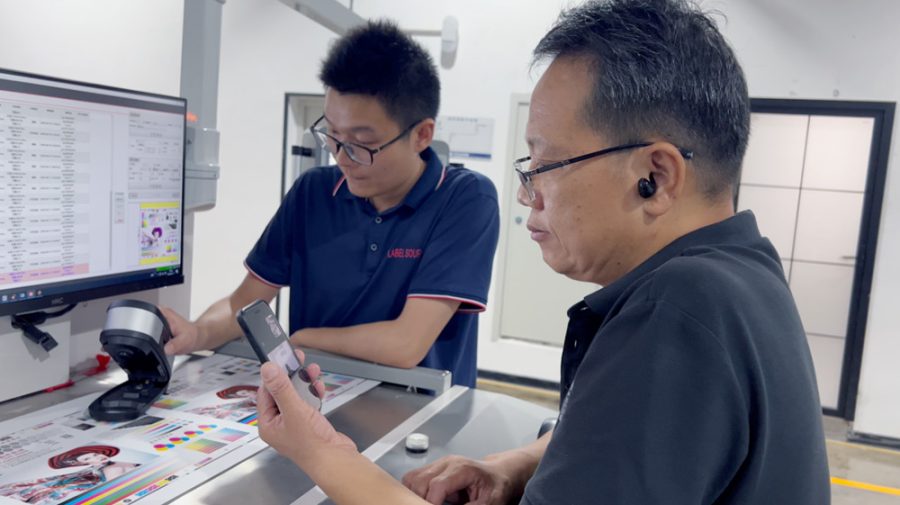 Color density measured ±0.02, Hanlabel & Label Source prove their strength with data.Read More
 -
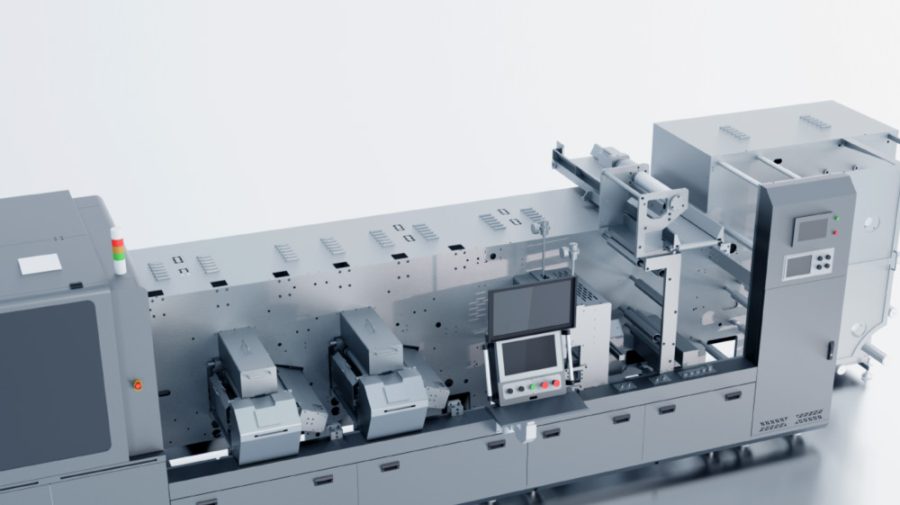 Adaptable to all scenarios! 1200DPI Hybrid Digital Printer, redefining label printing efficiency and quality.Read More